Amazing News!
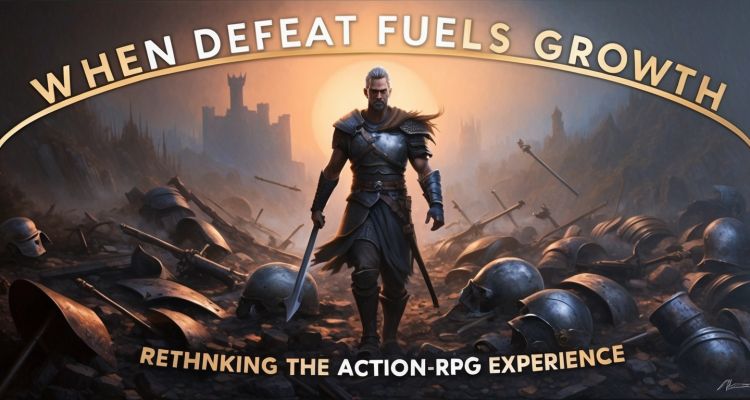
When Defeat Fuels Growth: Rethinking the Action-RPG Experience
The discussion surrounding challenging action-RPGs has grown increasingly prominent in recent years. Many gamers have strong opinions whether drawn to or repelled by the demanding combat and the process of learning through repeated setbacks featured in these titles. In this context, the director responsible for critically acclaimed titles has expressed uncertainty about attributing the popular label solely to his studio.
The director, known for overseeing legendary titles, pointed out that although his studio has often been linked with the creation of a specific subgenre, the innovative game design focused on experiencing defeat and growing stronger may have been inevitable. He suggested that while his work has been associated with establishing this niche, the gaming audience likely anticipated a core mechanic that rewards learning from failure. Thus, regardless of the eventual credit given, the incorporation of challenging cycles was bound to attract attention.
He further explained that their creative experiments validated the concept of integrating defeat into a game’s primary loop. This approach struck a chord with many players while simultaneously addressing a gap left unfilled by other titles. His remarks imply that the unique design philosophy was not an isolated invention but rather part of a broader shift in gaming trends that echoed the expectations of contemporary players.
The conversation then turns to the endurance of the label in gaming culture. While it is highly unlikely that fans will abandon its use, it is noteworthy how modestly the director addresses the debate over its origins. A brief overview of the discussion reveals several key points:
- The design emphasis on repeated defeat and recovery resonated with an audience ready for a more challenging experience.
- The creative blend of difficulty and growth filled a noticeable void in the market.
- Even if other developers might have implemented similar ideas, few managed to capture the essence as effectively.
This reflection highlights that the success of these games was less about inventing a concept, and more about revealing an underlying shift in player expectations that could have been tapped by anyone attuned to the needs of the modern gamer.